Like ants, myrmecologists
(and of course any other worker) use to interact among them. Obviously, I am
referring to those with whom you can establish work collaborations or just make
and listen suggestions and advices to improve the research you are performing. The
help you give and receive saves time and effort and sometimes shapes friendship
relations not only work relations. In the meantime, some collaborative works
become papers or big projects, others are just mentioned as acknowledgments or
forgotten (Yes! there are ungrateful people anywhere).
At http://gap.entclub.org/ you can find a worldwide list of
myrmecologist. It´s made me happy had had the great opportunity to talk with a
few of them and to work with a couple of them. I hope to interact with some
others.
 |
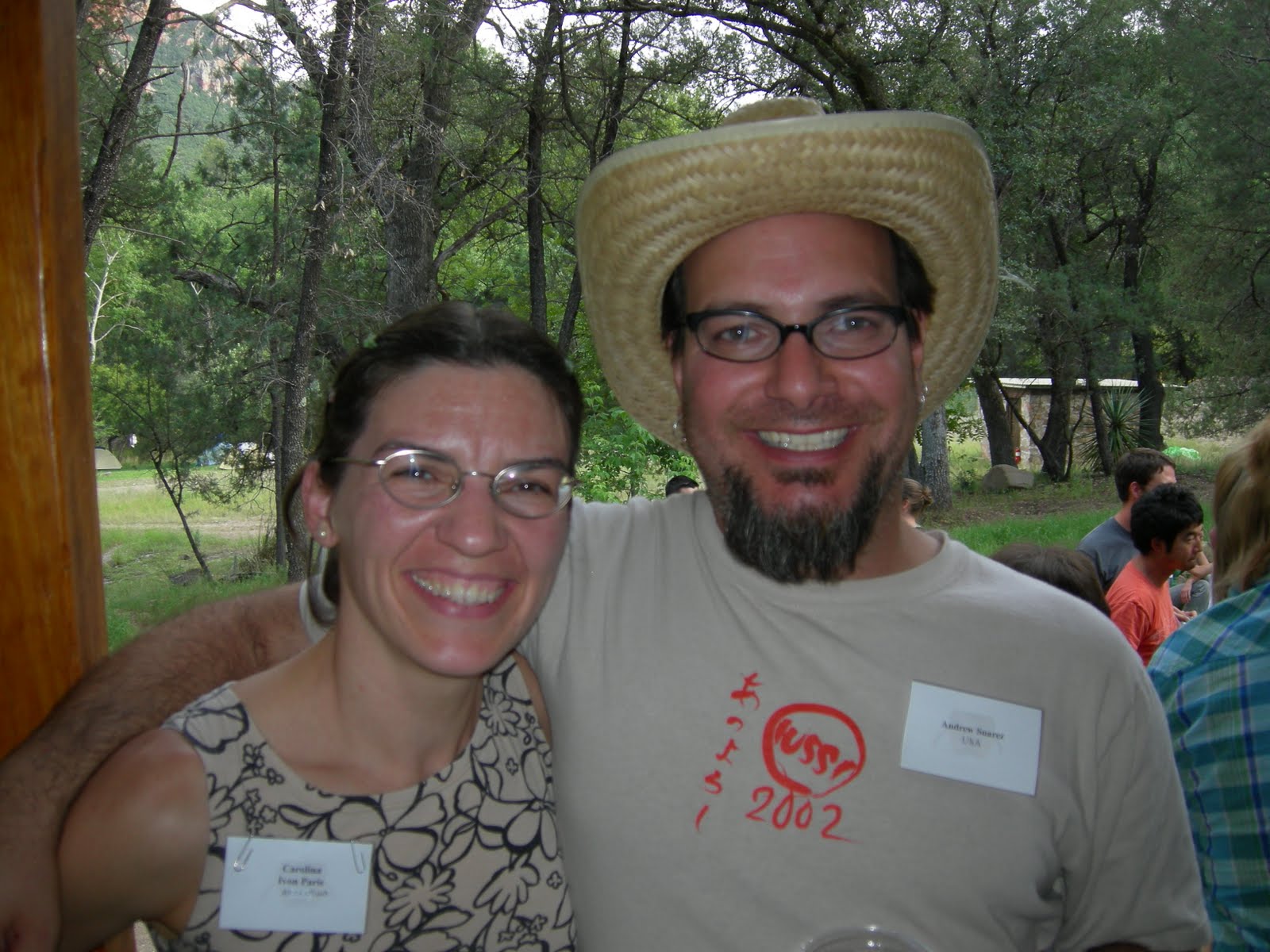
| Here is a good example of collaborative work. We (Priscila and I) collaborate with Chad Tillberg and Andrew Suarez, in a project about the ecological position of the tiger ant, as local people call Dinoponera australis at the National Park of Iguazú, Argentina. Now, Priscila is formely a PhD student under the direction of Andy and I was invited to visit his laboratory. |
I had a great experience visiting
Dr Andrew Suarez laboratory at Champaign-Urbana University last year. The ant
collection of A. Suarez and Alexander Wild gather specimens for the five
continents. So, in two weeks I have made my own “Journey to the ants”, all
around the world. It was amazing having
in my hands the dinosaur ant Nothomyrmecia
macrops. As I brought my own material I could compare the specimens and
learnt the details to identify some ant species. Additionally, I was trained to
take photographs as those ones of the ant web.


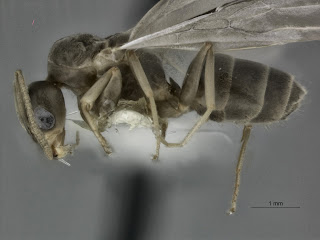
These are some of the photos I made at Andy’s lab. It is a queen of the invasive ant specie Linepithema humile still with wings. It is not common to find them with the wings as the queens do not fly, only the males. I found this one checking daily the nests I have in the laboratory, at home.
Not all is about work. Enjoying mundane things, such
as sharing a snack at a park in sunny day with friends, connect our lives with
those simple events that remind us how less we need sometimes to be happy. I
agree this sound like a cliché but this is what I fell.


Friday
afternoon, after pinning, identifying and photographing nothing better than a
dark beer at the Big Grove Tavern with Alex and Jo-Anne. I found high quality
and variety of taste of darks beers at Champaign-Urbana, Illinois. Sunday
morning, having breakfast with A Suarez and a friend at Dinner, (this is one of
my favorite photos)
Just a
final though. I know that Linkelyn, Facebook, Twiter, etc are useful tools to
know each other and keep connected. But, I prefer to met people in person, to
know how their voices sound, how they look at you meanwhile you are speaking to
them, how they express their passions, dislikes, jokes, embarrasments, anger,
etc. So, thank you to all those people who keep in touch with me (in alphabetic
order: Alex Wild, Andy Suarez, Members of Ecodes group, Luis Calcaterra, Mireia
Buitrago Diaz, Phill Ward, Silvia Abril, Xavier Espadaler)




 Participating in a race at Ezeiza, Buenos Aires, 1998
  Riding to the top of Puigmal at Pirinies, 2900m above sea level!
 This was one of those wonderful days when you feel the mountain allows you to see the world from the top. I should confess that I have tried two times to arrive to the top of Turo d' Home... In winter 2006 was the third time and I got it!
 Very happy after finding the first nest of Acromyrmex lobicornis at El Moyar an area 12km close to Cafayate a very nice village from the north of Argentina. I should follow the activity of the same ten nests for one year.

 A. lobicornis nest are really different depending on the site. At Santa Fe this ant species built domes. Here I was sampling damp material.

 From the left to right. Pablo, my husband, me and Priscila an undergraduate student. We were going to work at the rain forest. January 2009

 Hanging winklers at the laboratory in the CIES, the research tropical center at the National Park of Iguazú


